Guides
How to read a brewery taproom: 25 signals and a walkthrough for your own room
An observation protocol of twenty five signals for reading how a brewery taproom actually runs, plus how to run the same walkthrough on your own room.
What to take away
- No breweries are named here. This is an observation protocol, not a list of names.
- What is useful is knowing what to look at when you walk into any taproom: twenty five observable signals that tell you how the operation is actually run.
- Most of the signals are about labor and flow, because those are what a visitor can genuinely see and what most affects the result.
- Run the observation on your own room too, from the door, as though you had never been there.
- Write down what you saw the same day. A visit remembered a week later becomes an opinion.
Why the list is of signals rather than names
Any published set of breweries to watch reflects who was covered, who was available for interview, and which markets the writer knows. It ages within a year and it cannot tell you why an operation works.
A trained eye can. In an unfamiliar taproom, you can read most of how it runs in twenty minutes.
You see how many people hold the room, where bottlenecks are, whether the beer is looked after, and whether staff were trained or left to work it out. That skill compounds every time you travel and is worth more than any list.
Use the protocol on rooms you visit and, more usefully, on your own.
The twenty five signals
At the door and on arrival
Twenty Five Taproom Signals
- At the dooracknowledgement time, ordering clarity, queue blocking, posted hours, room sound
- At the barpour points, bartender steps, keg changes, glassware placement, pour consistency
- At the barhead and fill level, card payment time, space for a flight
- The listhandles pouring vs total, core vs rotating, strength stated, staff describe beer
- The listnon alcoholic option, takeaway offered and executed quickly
- The operationproduction area visible and condition, cooler near or far, deliveries
- The operationstaff working around layout problem, who is in charge
- When something goes wrong in front of you
- How long before anyone acknowledges you.
- Whether it is obvious where to order.
- Whether a queue forms in a place that blocks the entrance.
- Whether the posted hours match reality.
- What the room sounds like, and whether you can hold a conversation.
At the bar
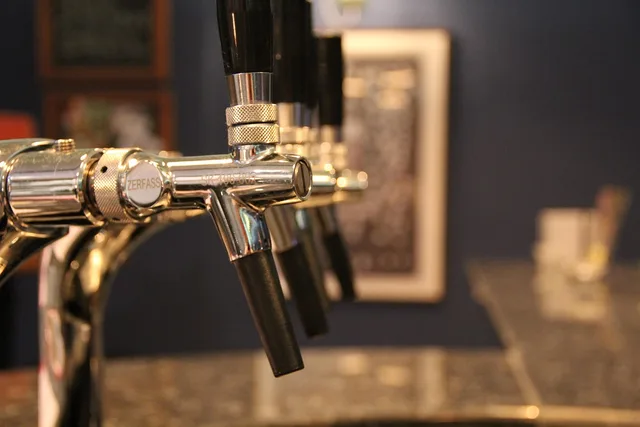
- How many places a pour can be made from.
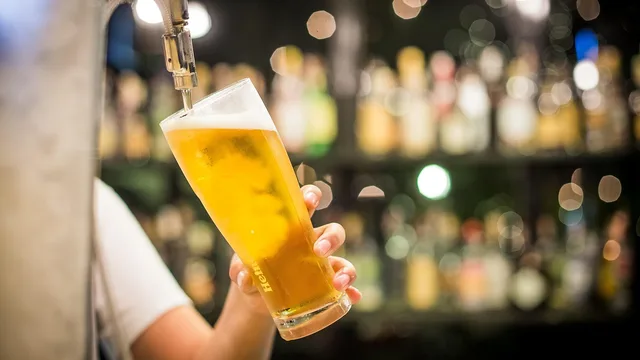
- How many steps a bartender takes per drink.
- Whether keg changes visibly interrupt service.
- Whether glassware is stored where it is used.
- Whether the pour is consistent between staff.
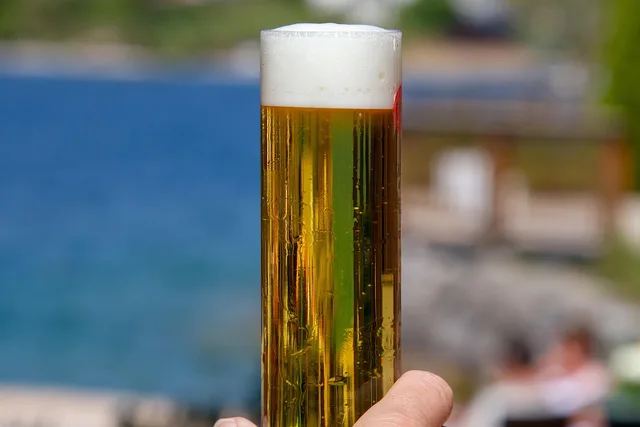
- Whether the head and fill level look the same on every glass.
- How long a card payment takes, end to end.
- Whether there is anywhere to put a flight down.
The list and the product
- How many handles, and how many are actually pouring.
- Whether core beers and rotating beers are distinguishable.
- Whether strength is stated and easy to find.
- Whether staff can describe a beer without reading.
- Whether there is a non alcoholic option and whether it is treated seriously.
- Whether takeaway is offered, and how quickly it is executed.
The operation behind it
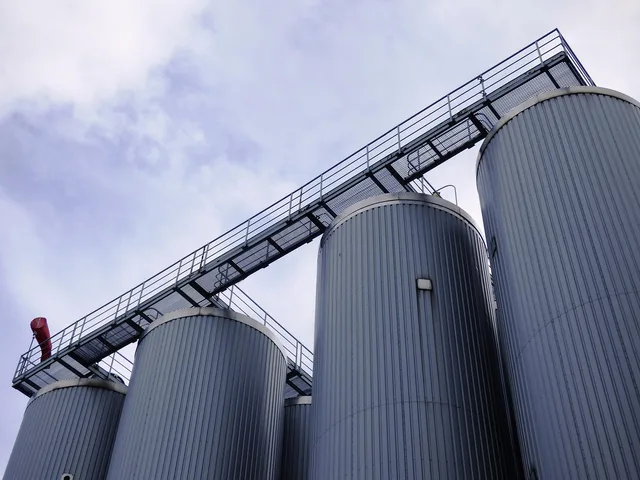
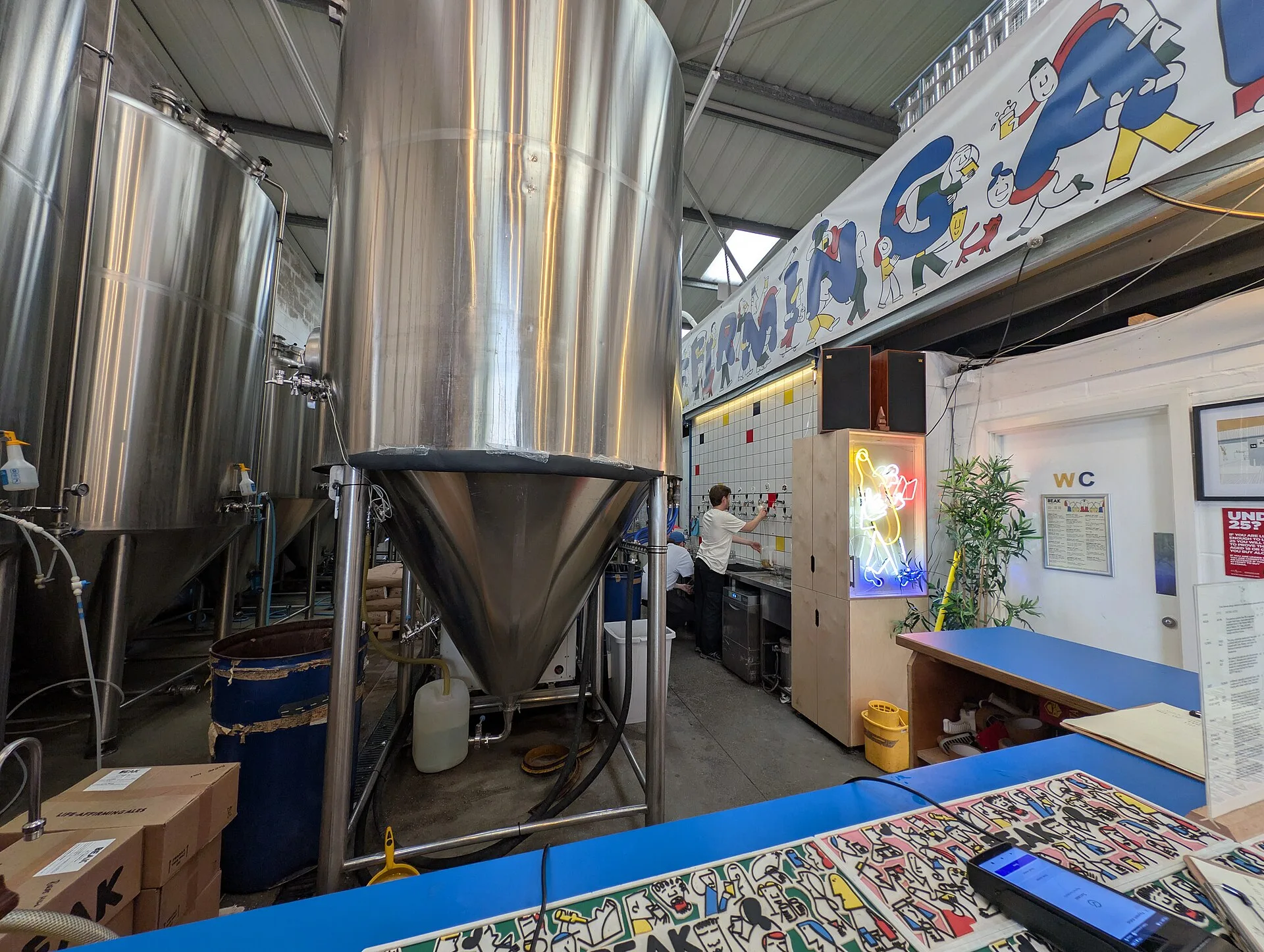
- Whether the production area is visible, and its condition if so.
- Whether the cooler is near the bar or far from it.
- How deliveries appear to reach the building.
- Whether staff are visibly working around a layout problem.
- Whether anyone is clearly in charge on the floor.
- What happens when something goes wrong in front of you.
Signal twenty five is the most informative single thing on the list. Any room looks fine when nothing goes wrong. What a spilled tray, a card decline or a guest who has had enough produces is the real measure of how well the place is trained and staffed.
What each cluster tells you
Arrival signals are about layout and the first thirty seconds, which decide more first visits than the beer does. The building largely fixes them.
What Each Signal Cluster Tells You
Arrival
- Focus
- Layout
- Decided by
- Building
- Signals
- 1-5
- Key insight
- First thirty seconds
Bar
- Focus
- Labor
- Decided by
- Build
- Signals
- 6-13
- Key insight
- People per hundred guests
List
- Focus
- Training
- Decided by
- Service reference
- Signals
- 14-19
- Key insight
- Same beer same way
Operation
- Focus
- Hidden parts
- Decided by
- Layout
- Signals
- 20-24
- Key insight
- Cooler far means longer walk
Signal four is the exception: hours that match reality everywhere they are published are your cheapest control. They belong with filling the hours you already staff, not the fit out.
The bar signals are about labor. Signals six through thirteen together tell you roughly how many people this room needs per hundred guests, and most of it was decided in the build rather than by the manager.
That is why they are worth studying: the room you are standing in is a demonstration of a layout decision, good or bad.
The list signals are about training and about product discipline. A room where every bartender describes the same beer the same way has a written service reference and uses it. One where nobody can answer a question about strength has neither.
The operation signals are about the parts that are usually hidden. A cooler far from the bar means a longer walk on every keg change, which happens at the busiest moment by definition.
Three clusters in practice
Anonymized examples. No business is named and no location is given.
Example one. A ten-tap room with a single till. Signal 3 fails because the queue blocks the door. Signal 12 fails because a card payment takes about a minute. Signal 6 passes. One payment point is doing all the damage, and it is the cheapest fix on the list.
Example two. A room where nobody can state a beer's strength without checking the board (signal 16) also pours uneven heads (signal 11). Two symptoms, one cause: there is no written service reference.
Example three. A brewery with the cooler at the far end of the building (signal 21) shows keg changes interrupting service (signal 8) in the busiest hour. Staff also work around the same layout problem all night (signal 23). That cluster points at the build, not the crew.
Turning observation into your own decisions
Three uses.
Three Uses of Observation
- Layouttake bar signals to candidate building
- Trainingmap list signals to training standard
- Expansionwatch signals six to thirteen closely
Layout. If you are still choosing or fitting a building, the bar signals are a live experiment in what layouts cost. Take the ones that impressed you back to your candidate building and ask, with a tape measure, whether it can produce them.
Training. The list signals map almost one to one onto a training standard. Anything you saw done well is something you can specify, and that belongs in hiring and training the crew rather than in a wish list.
Expansion. If you are considering a second room or longer hours, visit operations that already run what you are considering and watch signals six to thirteen closely. It is cheap research for one of the routes to more volume.
The U.S. Bureau of Labor Statistics: Food Service Managers profile is a useful companion here. It describes what running a room like this actually consists of: staffing, supply, sanitation, guest problems, budgets and payroll records, on a schedule of nights and weekends. Signal twenty four, whether anyone is in charge, is that job description made visible.
Observing your own room
This is the harder version and the more valuable one.
How to Observe Your Own Room
- Ask someone new to record all twenty five
- Sit and listen without explaining
- Do it twice a year on a busy night
- Record results in the same file
Ask somebody who has never been in to walk through and record all twenty five, then sit with them and listen without explaining. Every explanation you want to give is a signal that the room is not communicating something on its own.
Do it twice a year, and do it on a busy night rather than a quiet one, because the layout problems only appear under load. Record the results in the same file each time so you can see whether last year's fix held.
Give that file a shape. One row per visit, twenty five columns, one per signal: 0 for a problem, 1 for fine, N/A where the signal does not apply. A final note column carries the worst signal of the visit and one line on what you saw.
Compare column by column across visits. A signal that fails twice in a row is a layout or training problem rather than a bad night.
Where an observation points at a price or a value perception, that is worth checking against the way your prices are built rather than adjusting by instinct. A guest who thinks a pour is expensive is often reacting to the glass or the fill level rather than to the number.
What not to copy
A room that impresses you may be running a model you cannot run.
What is permitted differs by state. Takeaway formats, what may be sold, hours of service and who may pour are all set by the state alcohol beverage control board where that business operates, and the answer where you are may be different.
Ask your own board before copying anything you saw. Check it against what your license actually permits. Confirm the federal side of any production or packaging change at the Alcohol and Tobacco Tax and Trade Bureau: Starting a TTB-Regulated Business: Brewery page.
Both of those are United States rules. A Canadian reader should check a provincial regulator instead, such as the AGCO in Ontario, the LCRB in British Columbia, or the AGLC in Alberta. Federal excise duty on production is handled by the Canada Revenue Agency.
Scale differs too. A signal that reads as excellence in a large operation, three people behind a long bar with specialized roles, can be waste in a small one. Copy the principle, not the staffing.
The U.S. Small Business Administration: SBA Business Guide covers the general business decisions that sit behind any of this, from financing to insurance and hiring. It is the non alcohol half of the picture and worth reading before you act on any observation that costs money.
Common questions
Is visiting competitors worth the time?
Yes, and go alone, on a normal night, and pay for your drinks. A scheduled visit as a colleague shows you the room they want you to see.
How many rooms should I look at?
Enough that you stop being impressed by surface finish. That usually takes five or six, after which you start noticing the walk to the cooler instead of the light fittings.
Should I talk to the staff?
Ask the questions a guest would ask and stop there. What you want to learn is what a guest experiences, and interviewing them changes the thing you came to observe.
What if my room scores badly on the layout signals?
Some of it is fixable and some was decided by the building. Separate the two honestly, fix the fixable, and staff deliberately around the rest rather than pretending it is not costing you.
Does this work for a brewery without a taproom?
Partly. Signals twenty to twenty three still apply, and the rest do not, because there is no room to read.