Guides
How brewery and taproom owners turn bar moments into referrals
Brewery and taproom referrals traced to five moments at the bar, with the rules on reviews and rewards and party size as the measure that matters.
What to take away
- Referrals in this trade happen at one momentwhen a guest decides the place is worth showing somebody else. Almost everything you can do is about that moment.
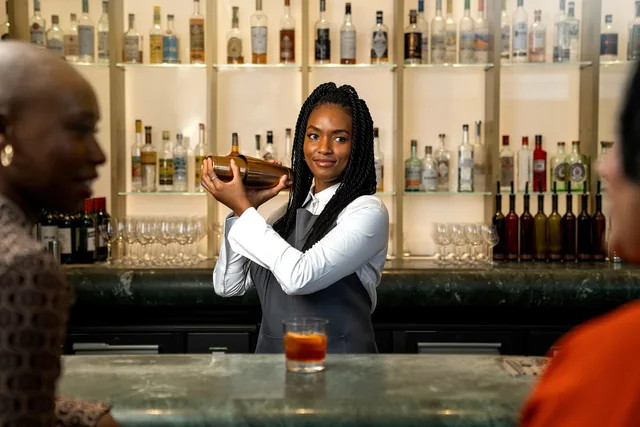
- The person who creates it is usually the bartender, not the owner and not a campaign.
- Asking for reviews and rewarding recommendations are regulated activities. What you may offer and what must be disclosed are set by federal guidance, and alcohol promotions add a state layer.
- Group size is the measure. A referral shows up as a party of four where a party of two used to be.
- Track the mechanism, not the sentiment. Count parties, not compliments.
Why the bar does most of the work
A referral is a small social risk. Someone is putting their judgment in front of friends, and they will only do it if they are confident about what the friends will find.
Confidence comes from consistency more than from excellence. A guest who has had the same good experience three times will bring people. A guest who had one exceptional visit and one indifferent one will not, because they cannot predict which one their friends will get.
That reframes the work. Most of what raises referrals is operational: the beer tastes the same on every visit, the staff can answer a question, the wait is predictable, and the hours are what they say they are.
None of it looks like marketing. All of it belongs with hiring and training the crew and with the general question of filling the hours you already staff.
The moments that create a referral
Five specific moments, each of which a bartender can be trained on.
Five Referral Moments to Train
- First recommendationask back, then suggest
- Correctionsimple rule, no manager needed
- Group arrivalgive realistic answer
- Non drinkertreat as real product
- Goodbyenotice they are leaving
The first recommendation. A guest asks what to drink. If the answer is a question back, about what they usually enjoy, and then a confident suggestion, the visit usually goes well. If the answer is "they are all good", it usually does not.
The correction. Something is not right and the guest mentions it. How this is handled is the strongest single driver of whether they return with company. The rule should be simple, known by everyone, and not require a manager for small things.
The group's arrival. A party of six arrives with no reservation on a busy night. Whether they are given a realistic answer, rather than an optimistic one, decides whether the person who brought them feels responsible for a bad evening.
The non drinker. Whether a group comes at all often turns on this. Treat the non alcoholic option as a real product rather than an afterthought and you have made a whole party possible.
The goodbye. Whether anyone notices they are leaving. It costs nothing and it is skipped constantly.
Write these five into your service standard and verify them the way you verify a pour. They are more specific and more coachable than "be friendly".
What you may and may not do about reviews
Reviews are a form of referral and they are governed by rules.
The U.S. Federal Trade Commission: Soliciting and Paying for Online Reviews: A Guide for Marketers explains what crosses the line when a business asks for or rewards reviews.
For a taproom, ask everyone the same way instead of asking only people who seem happy. If you offer anything in exchange, disclose the connection clearly. Suppressing or selectively surfacing reviews is its own problem.
Most reviews land on your local presence. The Google Business Profile Help: Tips to improve your local ranking on Google page lists what the platform says matters for a local business.
Treat it as the platform's own account of its own product. Pair it with the checklist in keeping your local listings honest and current.
On top of both sits your state alcohol beverage control board, which may restrict what an alcohol licensee can offer as an inducement. A referral reward that would be unremarkable for a bookshop may not be permitted for you. Ask before you design anything with a reward attached.
Designing a referral mechanic that is worth running
Most referral programs in hospitality fail for the same reason: they add work at the bar during the busiest moment. Test any idea against that first.
Is the Referral Mechanic Worth Running?
Can a bartender execute it in seconds during a rush?
survives the busiest moment
quietly stops within a month
If the answer to the first question is no, the program will quietly stop being run within a month and you will conclude that referrals do not work in your market.
The simplest mechanics survive best. A guest who is told what is coming next week, by name, with a date, has been given something to bring people to. That takes three seconds and requires no system.
Measuring it honestly
Sentiment is not a measure. Count things.
Count These Referral Measures
- Average party size by day part
- New guests during known slow hours
- Repeat visits within a month
- Reviews mentioning being brought
- What people ask for at the bar
Compare the same day of the week against the same day four weeks earlier rather than week against week. And be careful about attributing a good month to a referral effort when an event or the weather explains it, which is the same discipline used in telling a real shift from noise.
The part nobody wants to hear
Referrals are capped by capacity. If your busy nights are already at the limit of what your room and your staff can hold, a successful referral effort makes the experience worse, and the next referral does not happen.
Check the constraint before you push. If your best nights are full and midweek is quiet, move demand rather than create it. If both are quiet, create it.
If you are consistently full, the question is the routes to more volume, not referrals.
A quarterly review
- Pull average party size by day part and compare with the previous two quarters.
- Read the reviews from the quarter and note which of the five moments they mention.
- Ask each bartender which of the five they find hardest, and fix that one.
- Check that anything you offer is still permitted and still disclosed correctly.
- Write one paragraph on what changed, and file it.
Step three usually produces the most useful finding, because the moment staff find hardest is the correction, and that is the one with the largest effect.
Common questions
Should I run a formal referral program?
Only if it passes the five tests above, and only after asking your state board what an alcohol licensee may offer. Most rooms get more from consistency and from staff who can recommend well.
Do discounts generate referrals?
They generate visits, which is different. A discount brings someone once; a confident recommendation from a bartender is what makes them bring somebody else.
How do I respond to a bad review?
Briefly, factually, and without arguing. Address anything specific, say what changed if something did, and stop. The audience is the next reader, not the reviewer.
Can I offer staff a bonus for reviews?
Ask carefully, because incentivizing reviews creates disclosure obligations and can produce exactly the pattern the federal guidance warns about. Incentivize the service behavior instead, which is what you actually want.
How long before referral work shows up?
Months, not weeks. Confidence takes several consistent visits to build, and the measure moves slowly because party size moves slowly.