Guides
Top brewery and taproom products, rated on evidence rather than hype
Taproom products ranked by staff minutes per dollar, with the tap list run as a tank schedule, a clear rule for retiring a beer, and a full keg yield check.
What to take away
- Rank brewery and taproom products by staff minutes per dollar earned. The order rarely matches the one you would guess.
- A package is a bundle of approvals, materials, labor and shelf life, and each has its own lead time.
- The lineup is a production schedule with prices on it.
- A printed label carries an approval process that does not care about your release date.
- Adding a product is easy. Retiring one is the discipline that keeps the lineup working.
The ranking, and the number behind it
Most product advice asks what customers want. In a taproom, the harder question is what your building and crew can serve without falling over.
Staff minutes per dollar
Cooler cans
- Bar time
- Lowest
- Tank time
- None
- Shelf space
- Cooler
- Cash tied up
- Low
- Lead time
- Short
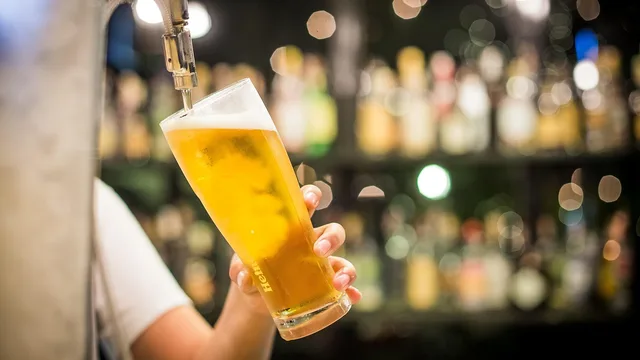
Draft pour
- Bar time
- Predictable
- Tank time
- Some
- Shelf space
- Tap slot
- Cash tied up
- Low
- Lead time
- Brew cycle
Merch
- Bar time
- None
- Tank time
- None
- Shelf space
- Wall rack
- Cash tied up
- High
- Lead time
- Vendor
Hop water
- Bar time
- Low
- Tank time
- Some
- Shelf space
- Cooler/tap
- Cash tied up
- Low
- Lead time
- Short
Every item takes something finite: tank time, cooler space, bartender seconds, a tap slot, a packaging run. Margin alone will lead you wrong. A beer that ties up a fermenter for six weeks and a bag of chips that ties up thirty seconds of bar time compete for nothing in common.
The ranking below uses staff minutes per dollar of revenue, plus tank time and forward lead time. Bar minutes are the scarcest resource in the room, and an item that eats them is expensive on exactly the nights it sells best.
| Rank | Product, by name | What it is | Why it ranks here |
|---|---|---|---|
| 1 | Cooler cans, including Athletic Brewing Run Wild IPA and Free Wave Hazy IPA | Cold 12 ounce cans sold single serve at the register | Lowest bar time of anything you sell, and it moves without a conversation |
| 2 | A draft pour of a flagship such as Sierra Nevada Pale Ale, or your own core pale | One pull from the tap wall into a glass | Predictable waste, and the glass comes back |
| 3 | Screen printed shirts, hats and branded glassware | Merchandise on a wall rack | No production time at all, but it ties up cash and shelf |
| 4 | Lagunitas Hoppy Refresher hop water | Zero alcohol, zero calorie cans and draft | Sells in low volume and earns its place on party size |
| 5 | A pretzel program or a rotating food truck | Pretzels, a hot dog, a truck on a schedule | Lengthens visits and adds a second inspection regime |
| 6 | A flight of four or five 4 ounce pours | Taster set on a paddle | Several pours, several glasses, several questions |
| 7 | A crowler seamed at the bar on an Oktober Can Seamer | Beer filled and sealed at the bar | Fill, seal, label and sanitize, all during the rush |
| 8 | Your own labeled 16 ounce four packs in Ball cans | A packaged run sold off site | No bar time, but the run day competes with the taproom |
Staff minutes per dollar, worked example
Take a fully loaded bar wage of $18 an hour, which is $0.30 a staff minute. Time each sale at the bar and divide those minutes by the price. The figures are typical, not measured in your room.
Staff minutes per dollar
| Item | Typical price | Bar time per sale | Staff minutes per dollar |
|---|---|---|---|
| Cooler can | $6 to $8 | about 15 seconds | 0.03 to 0.04 |
| Hop water can | $5 to $7 | about 15 seconds | 0.04 to 0.05 |
| Four pack to go | $14 to $18 | about 1 minute at the register | 0.06 to 0.07 |
| Draft pour | $7 to $9 | about 45 seconds | 0.08 to 0.11 |
| Merchandise item | $20 to $30 | about 2 minutes | 0.07 to 0.15 |
| Pretzel or snack | $5 to $8 | about 2 minutes | 0.25 to 0.40 |
| Flight of four pours | $10 to $14 | about 4 minutes | 0.29 to 0.40 |
| Crowler fill | $12 to $16 | about 6 minutes | 0.38 to 0.50 |
At $0.30 a minute, a draft pour spends about 3 cents of bar labor per dollar of revenue. A crowler fill spends about 13 cents. That gap, not the beer cost, is why the crowler sits near the bottom.
The table is a screen, not a verdict. Tank time, shelf life and lead time move items up or down, which is why a four pack with a good ratio still ranks last.
Fill in your own version with your own prices, your own pour times and your own wage. The ranking that comes out will be yours, not this one.
Ranking a flight sixth does not mean dropping it. A flight is often how a first time guest finds the beer they will drink for the next two years. It means knowing which items you subsidize and deciding that on purpose.
Named products, and who each one suits
Categories are only useful once you put real names in them. Each entry below is a product or supplier a taproom operator can check today, with what it does and who it fits.
- Athletic Brewing Companymakes non alcoholic beer sold in cans and on draft, including Run Wild IPA and Free Wave Hazy IPA. It suits a room where a group includes a designated driver or a non drinker, because it keeps the whole party in the building. Pricing comes from the distributor rather than the brewery.
- Lagunitas Hoppy Refresheris a hop water, zero alcohol and zero calories, sold in cans and on draft. It suits taprooms that want a non alcoholic handle without running a second brewing process. The brewery is in Petaluma, California, and Heineken owns the brand.
- Ball Corporationsupplies aluminum cans and ends to craft breweries through distributors, in sizes from 12 ounce to 19.2 ounce. It suits a first packaging run, because most rules are written around those formats. Cans are quoted by the pallet or truckload, and the price follows the aluminum commodity.
- The Oktober Can Seamer and Dixie Canner Company seamersare countertop machines that seal a 32 ounce crowler at the bar. They suit a taproom that wants takeaway without a full packaging run, at the cost of bar minutes. A countertop seamer typically runs in the low thousands of dollars.
- Glass growlersremain the cheapest takeaway vessel, typically $5 to $12 empty, and the one most state boards have specific rules about. They suit a brewery whose regulars bring their own back, and they fail badly wherever fill rules or seals are not followed.
- Pretzel and snack programsfrom regional bakeries and distributors suit a taproom with no kitchen, because they add food sales without a second inspection regime. A soft pretzel typically sells for $4 to $8. Margins are thin and the point is the longer visit.
- Screen printed merchandise, typically shirts, hats and branded glassware, suits any taproom with foot traffic and a story. It carries no production time and no shelf life. A small run with a screen setup typically starts in the low hundreds of dollars.
Name only what you can verify. If a supplier cannot show you published specifications, treat the claim as unproven until they do.
The tap list is a tank schedule
A handle is a claim on a fermenter for the length of a fermentation and conditioning cycle, plus cellar and packaging time to get it into a keg.
Tank allocation rule
Count tanks, not handles
Commit to core beers
Reserve for rotating and one-off
That leads to a simple discipline: count your tanks, not your handles. Decide how many are committed to beers that must always be available, and how many are free for rotation. The free ones are the only place experimentation can happen without risking a core beer running dry.
- Core.Always on. These pay the rent and they are what a regular expects to find. Changing a core recipe is a bigger decision than adding a new beer.
- Rotating.Present but changing. This is what gives a return visit a reason.
- One off.A single batch, often tied to an event or a collaboration. Plan the tank time and cellar space before the launch.
The mistake is letting the third group quietly eat the first. A taproom that runs out of its flagship because three tanks are full of experiments has traded reliable revenue for novelty.
Keg yield check
Keg sizes are fixed, so the pour count is too. These figures assume a 12 ounce pour.
- Sixth barrel
- 5.16 gallons, about 661 fluid ounces, or about 55 pours.
- Quarter barrel
- 7.75 gallons, about 992 fluid ounces, or about 82 pours.
- Half barrel
- 15.5 gallons, about 1,984 fluid ounces, or about 165 pours.
A 16 ounce pour cuts each count by a quarter, to roughly 41, 62 and 124 pours.
Allow 5 to 10 percent for foam, line cleaning, spillage and the last pint that will not pour.
Worked example: a half barrel landed at $180, poured at 12 ounces with 8 percent loss, gives about 152 pours. The beer costs about $1.19 a pour.
Add the bar time, about 0.75 minutes at $0.30 a minute, and direct cost is about $1.41. At $8 a pour, that is roughly 18 percent of the price.
Pour 16 ounces and the same keg gives about 114 pours after loss, so the beer alone costs about $1.58 a pour.
Your yield is set by pour size, gas pressure, line length and how often the lines are cleaned.
What a package really costs
Moving beer out of the glass and into a container adds four things: materials, fill labor, a shelf life obligation, and an approval.
Packaging cost layers
- Materialscans, ends, labels
- Fill laborstaff minutes per run
- Shelf lifeoxygen pickup and dating
- ApprovalTTB label clearance
- State rulescontainers, sealing, marking
Materials and fill labor are visible. Shelf life is less so: a filled container is a promise about how the beer will taste in a month, and that promise is harder to keep in some formats than others.
Ask what your packaging setup actually achieves for oxygen pickup, then date conservatively.
Cans are quoted by the pallet or truckload, and the price tracks the aluminum commodity rather than a fixed list rate. Crowler cans, the 32 ounce format seamed at the bar, typically cost under a dollar each. A countertop seamer for them runs in the low thousands of dollars.
The approval layer catches people out. Beer labels are regulated, and what appears on them, along with the process for clearing them, is a federal matter.
Start at the Alcohol and Tobacco Tax and Trade Bureau: Starting a TTB-Regulated Business: Brewery page for the framework of a brewer's obligations, then ask the regulator directly about the label process for the product you have in mind. Do not order printed materials on the assumption that a design will clear.
Your state adds its own layer. It sets what containers you may fill, whether you may fill them for a guest at the bar, and how they must be sealed and marked.
Each is a question for your state alcohol beverage control board, and the answers vary widely.
Claims, records and the cost trail
Everything on your menu board, your can, your website and your chalkboard is advertising. The Federal Trade Commission: Advertising FAQs: A Guide for Small Business sets out that claims must be truthful and supportable, and that material connections behind an endorsement have to be disclosed.
Claims and records trail
- Ingredient and origin claims match purchases
- Strength claims match measured and labeled
- Health and nutrition claims avoided
- Allergen handling follows state food code
- Labor hours coded to each run
Three claims need care in a taproom. Ingredient and origin claims must match what you actually bought. Strength claims must match what you measured and what the label states.
Health, nutrition, or how a beer will make someone feel are the riskiest and least likely to sell an extra glass.
Where you serve food, the applicable code is whichever one your state adopted, and allergen handling sits inside it. That is a separate compliance track with its own inspections.
Behind every product is a record trail: ingredients bought, materials consumed, labor spent. Units produced, sold and lost leave a mark too. The Internal Revenue Service: What kind of records should I keep? leaves the system to you, as long as it clearly shows income and expenses and the supporting documents exist.
Labor is the line that escapes. A canning run pulls people off other work, and if those hours are not coded to the run, the packaged product looks cheaper than it is.
The U.S. Bureau of Labor Statistics: Food Service Managers profile shows how much of a manager's week goes to supply, scheduling and payroll records. That time is part of the cost of a complicated lineup.
Retiring a product
Most lineups grow and never shrink. That is how a taproom ends up with fourteen handles, three of which sell.
Retire a product
Does it sell enough volume?
Keep and review again
Check if it brings other buyers
Set the rule before you need it. A workable one: any item below 2 percent of taproom revenue for two quarters running goes on the retirement list. So does any item above 20 staff minutes per dollar that has no halo sales behind it.
Review the whole lineup once a quarter, at the same meeting where you plan the next season. Keep the review on the calendar in a good quarter too, because a weak item hides when everything is busy.
The halo test saves items that look weak alone: a poorly selling non alcoholic option may be why a group of five chose your room.
Then retire something. Attention is finite, and a lineup of fourteen handles spreads it thin. Tell guests plainly and in advance, because the beer somebody loves is not a line item to them.
The same review applies to the packaged range, and it belongs alongside your read of the wider market rather than in a bar level decision.
Fold it into the wider startup and market picture so the lineup, the lease and the build are planned against the same numbers.
Common questions
How many beers should be on tap?
As many as your tank count can keep full and your bar can explain. A handle that runs dry mid week and a beer nobody can describe are both worse than a shorter list served well.
Are cans or growlers better for takeaway?
They fail differently. Cans need a packaging run and hold quality longer. Growler and crowler fills need no run but consume bar time at the busiest moment and have a much shorter useful life.
What you may offer at all is a state question, so ask your board before comparing them.
Should a taproom serve food?
It is a second business with its own code, inspections, staffing and waste. Where it works, it works because it lengthens visits. Decide it on capacity and licensing rather than on the assumption that food is a margin opportunity.
How far ahead should a seasonal release be planned?
Work backward from the longest lead time, which is normally an approval or a specialty ingredient, not the brewing. Typical planning figures run 4 to 6 weeks for artwork and label approval, then 2 to 4 weeks for label printing once the proof is signed.
A specialty ingredient that is not in your distributor's stock can take 8 to 12 weeks to land. A seasonal with a printed label and a special malt needs 12 to 16 weeks from decision to pour.